
Roselle Previous Residents by Era
Roselle previous residents research changes with the target year. A recent Roselle title question normally begins with the current property context and the Union County Clerk’s recorded-instrument index. Earlier Roselle work moves to the Record Room and State Archives sources. Roselle household evidence comes from a dated directory or census, not from a title record alone. Use the year of the Roselle association to choose a source, and retain gaps rather than filling them with a likely story.
| Roselle source | Years it covers | Where held | What it can show |
|---|---|---|---|
| Union County Clerk web land index | June 1, 1977 to current displayed date | Union County Clerk online | Named parties, document path, recording references |
| Union County Clerk Record Room | 1857 to present | 2 Broad Street, Elizabeth | County land transactions and office-copy route |
| County deed microfilm | Through 1900 | New Jersey State Archives | Older instruments and legal descriptions |
| Price & Lee directories | 1924 to 1969 in verified non-contiguous runs | New Jersey State Library inventory | Dated address and compiled household entries |
| Federal and state census records | Federal schedules through 1950; New Jersey 1855 to 1915 with gaps | Archives and partner research routes | Household, residence, and enumeration context |
| Union naturalizations | 1857 to 1948 | New Jersey State Archives | Name variants, residence, origin, witnesses, and dates |
For Roselle previous residents, start with the source nearest the date in question. The Roselle web deed index is practical after its online start. The Roselle Record Room and archival microfilm bridge earlier land work. Roselle directories and census schedules add the time-specific household layer.
Roselle Previous Residents Deed Index
The Union County Clerk Official Land Records Search is a name index, not an address search. For a Roselle house, obtain the displayed owner and block/lot from an assessment or parcel source first. Search the Roselle owner as a grantee to locate the purchase instrument, read its grantor and prior-reference information, and then search that grantor as a grantee for an earlier acquisition. A Roselle deed can establish a transfer of title, but it does not establish who lived at the address.
The Clerk’s Book/Page search is shown below. It becomes useful when a Roselle instrument reference has already been found in a deed, tax note, or archival citation.
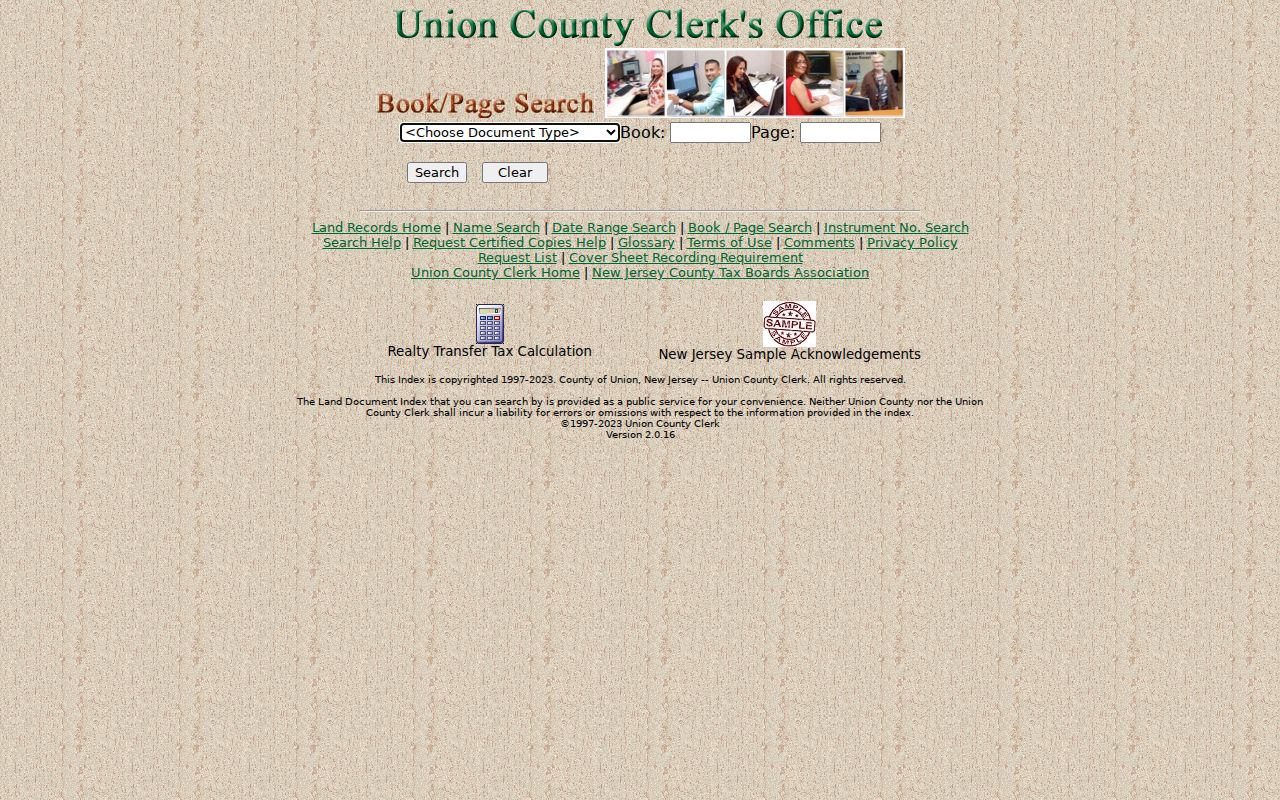
The online Roselle deed path begins June 1, 1977, while the Union County Record Room retains land transactions from 1857. Web images before January 1986 are still being added. No image icon is not proof that a Roselle instrument is absent.
Roselle Previous Residents Deed Chain
A Roselle chain of title follows land transfers backward from the current Roselle owner. It should be recorded as a sequence of documents, not as a list of presumed residents. The Roselle address helps locate the parcel record, while the legal description and party names keep the chain steady when a Roselle street form changes. Use the clerk’s exact, starts-with, and Soundex name options for spelling variants, and keep a separate note for every uncertain link.
- Capture the Roselle situs address, block, lot, displayed owner, and legal-description clues from the Roselle assessor or parcel route.
- Search that Roselle owner as grantee in the Union County Clerk index and record the document type, date, book/page or instrument reference, grantor, and legal description.
- Search the prior Roselle seller as grantee to locate that party’s earlier acquisition. Compare the legal description before treating it as the same parcel.
- Repeat the Roselle sequence backward through the web period, preserving variations in initials, surnames, and instrument references.
- For an earlier Roselle transfer, ask the Record Room about office copies or use the State Archives county deed microfilm through 1900.
- Grantor and grantee
- The grantor transfers an interest in a Roselle parcel. The grantee receives that interest. Each role is a deed role, not a statement of occupancy.
- Chain of title
- The documented Roselle sequence of transfers for the same legal parcel, followed from one instrument to the next.
- Legal description
- The land identifier in the Roselle deed, such as a block and lot or another title description. It can outlast an address change.
Note: A Roselle deed chain should preserve both execution and recording dates because they can differ and answer different timing questions.
Roselle Previous Residents Instrument Trails
Roselle deed research can shift from a name search to a document reference once an instrument number appears. The Union County index also offers date-range, Book/Page, and Instrument Number tabs. The date route requires a document type and a range no longer than 31 days. Instrument searching requires document type, year, prefix, instrument number, and suffix. These Roselle controls are best used after a source supplies a reliable reference.
The Instrument Number search shown in this capture records the fields that narrow an identified Roselle instrument.
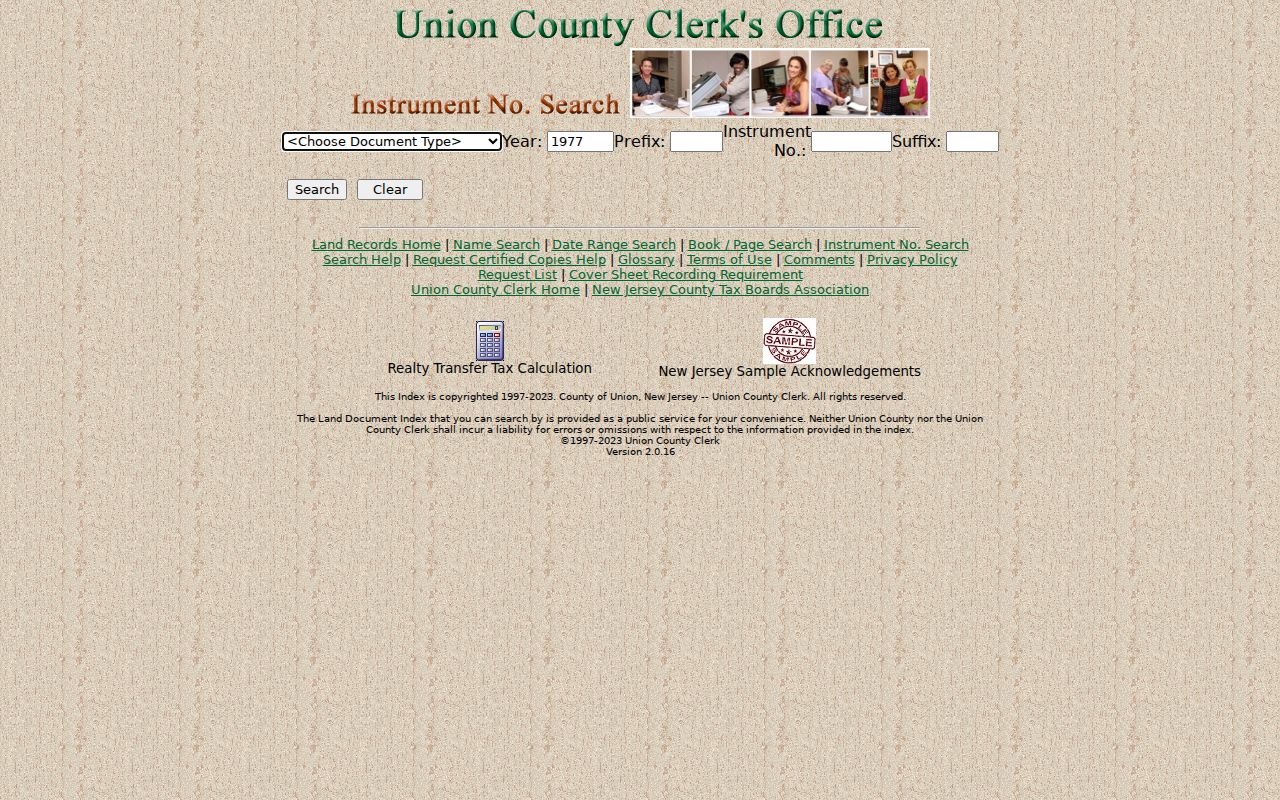
For a Roselle image, legal-description question, or certified-copy need, confirm the current procedure with the Union County Clerk. The web index is a convenience service, and the Record Room remains the Roselle fallback when an older document is not published online.
Roselle Past Residents in Directory Years
Roselle past residents are best matched to the exact directory edition rather than to an assumed annual sequence. The New Jersey State Library inventory verifies multi-town Price & Lee volumes that include Roselle in non-contiguous runs from 1924 through 1969. Roselle has no confirmed Roselle-only reverse-directory run in the reviewed official material. Before using an address section, ask for the exact edition and inspect whether that Roselle volume actually has a street or reverse index.
Use this Roselle flow for a dated household question: deed or address year → nearest Price & Lee title with Roselle coverage → exact transcription and page reference → closest census year → a second record, such as probate, a newspaper, or a later deed. The confirmed directory titles include other municipalities, so Roselle must be verified in the title and city section, not presumed from the broader Elizabeth label.
The Roselle directory shelf, formats, and request language are collected on the Roselle city directory page. A Roselle past-resident result remains a dated association until another Roselle source confirms it.
Roselle Previous Residents Census Checks
Roselle census work answers a different question than a Roselle deed chain. Federal population schedules through 1950 are public under the release rule. New Jersey state censuses were taken in years ending in five from 1855 through 1915, but the 1855, 1865, and 1875 material is incomplete, and 1915 is the last state census. A missing Roselle entry may reflect an incomplete schedule, a municipality label, or spelling, not a move.
The New Jersey State Archives genealogical collections include Union County naturalizations from 1857 through 1948. For Roselle work, a naturalization record can provide residence, birthplace, witnesses, dates, and name variants that help test an identity across Roselle directories and census records.
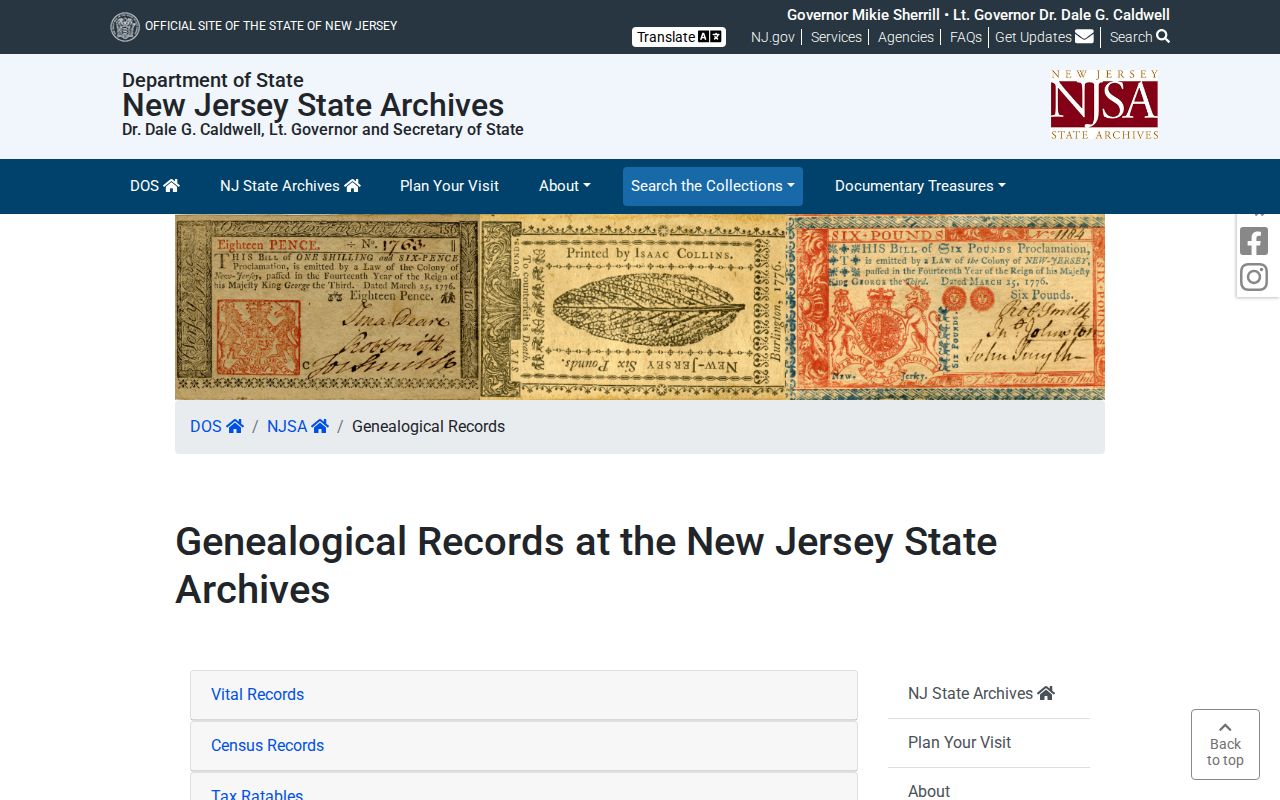
Roselle census and naturalization entries must retain their original spelling and place label. A Roselle name similarity is not enough to merge two people across records.
Roselle Previous Residents Map Context
Roselle house history gains geographic context from the Library of Congress Sanborn volume, created in 1923 and reprinted in 1958. The Elizabeth volume expressly includes Roselle as a secondary location. Its Roselle sheets can show a building footprint, construction or use label, street name, and nearby street layout. They cannot provide a current Roselle owner list or prove a move-in date.
The New Jersey State Archives research overview is shown in this capture. Its research-center and collection routes are the Roselle fallback for deeds, probate, vital indexes, newspapers, and other historical material that does not appear in a current web index.
Roselle records may use township, county, Elizabeth-area, or neighboring-place terms before the borough’s modern name. Roselle was incorporated in 1894, so an older Roselle search should keep those historical labels in the query notes.
Roselle Previous Residents Archive Limits
Roselle family-history work sometimes reaches a vital-record boundary. The State Archives holds historical indexes and collections, while the New Jersey Department of Health is the statewide custodian for later records. For genealogy, New Jersey limits access by event type, age, death status, and proof. Births within 80 years or involving a living person, marriages within 50 years, and deaths within 40 years are restricted under the state’s non-genealogical rules.
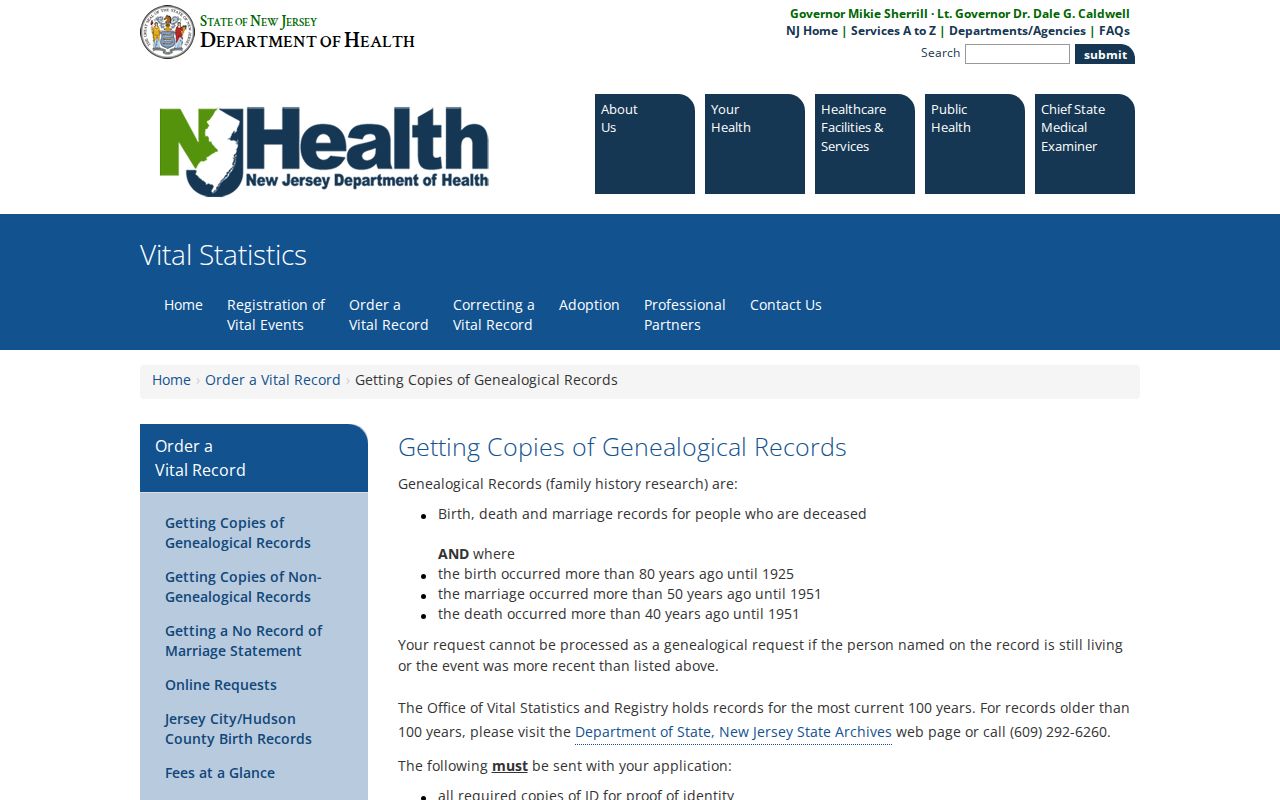
The New Jersey genealogical-record instructions shown here explain the official access route. A Roselle researcher should use the requested form, supply only the required eligibility material, and distinguish a genealogical certification from a document used to establish legal status.
Roselle probate work is another carefully bounded route. The Union County Surrogate can hold estate and administration records, which can identify an executor, heir, devisee, attorney, property reference, or address. Those Roselle records should be read as estate evidence, not as a current-residence record.
Roselle Previous Residents Address Gaps
No authoritative Roselle street-renumbering ledger, borough-wide numbering formula, or official Roselle address-change table was found in the reviewed sources. That gap matters when a historic Roselle number cannot be matched to a current parcel. A later Roselle address may reflect an update, subdivision, consolidation, map change, or an indexing issue. Compare Roselle deeds, Sanborn sheets, municipal tax maps, postal history, and a dated answer from the clerk or assessor.
Roselle assessment cards also have a date limit. The Roselle assessor FAQ says property record cards originated during the 1988 revaluation and may not reflect current condition or amenities. Record an estimated or refusal notation as Roselle assessment context, not as proof about a person or household.
Note: Mark a Roselle connection as unresolved when the address, legal description, name, or date cannot be reconciled from the record itself.
Roselle Previous Residents Research Limits
Roselle previous residents research should not turn old sources into a present-day profile. A Roselle deed establishes title. A Roselle directory or census provides a time-bound association. A Roselle obituary, probate file, map, or naturalization record has its own scope. Each Roselle finding needs a source, date, page or instrument reference, and a clear label for whether it is a direct record, an index, a transcription, or an inference.
For a Roselle record that may be redacted or held outside the public web, direct a specific request to the correct custodian. Roselle municipal records may be requested through the Borough Clerk under the New Jersey Open Public Records Act when an identifiable existing record is sought. The Act does not require Roselle to create a custom history or answer an open-ended research question.
Lawful use. Use Roselle house-history and family-history records with care. Do not use a Roselle address trail to stalk, harass, intimidate, or locate a protected person.